About the Lesser Kudu
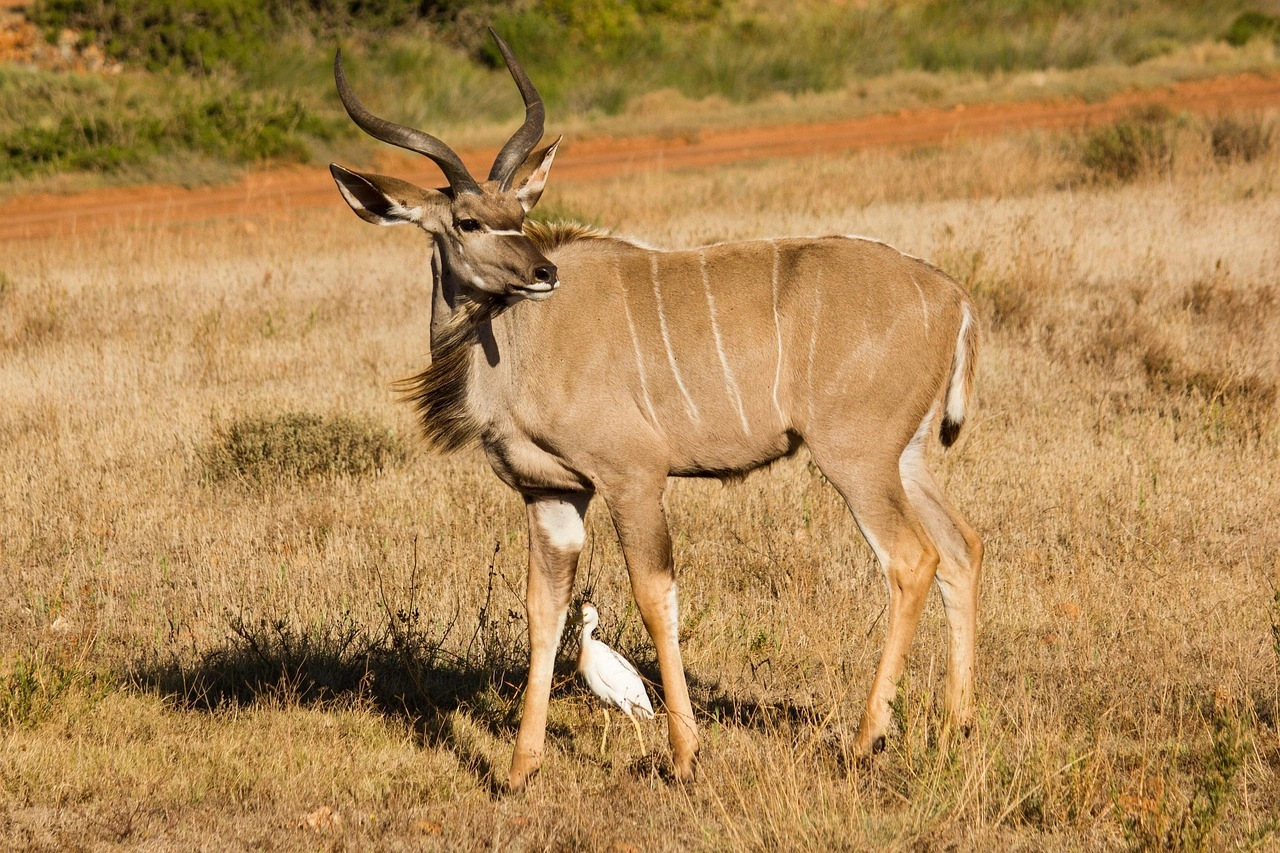
Lesser kudu have vertical white stripes, large rounded ears and white facial marks. Adult males become greyer with age and carry long spiral horns, while females are more reddish-brown.
They are usually found singly or in small groups and prefer dense cover. Their large ears and cautious behaviour help them detect danger before moving silently through bush.
Safari context in Kenya: Within the current Greatlink Safaris destination network, useful places to look for this species include Tsavo West National Park, Buffalo Springs National Reserve, and Samburu National Reserve. Sightings remain natural and unpredictable, so Greatlink Safaris plans around habitat, season and realistic wildlife expectations rather than guarantees. Travellers can also explore the Kenya wildlife guide or compare private Kenya safaris that visit suitable ecosystems.
Conservation: Lesser kudu are Near Threatened, affected by hunting, livestock pressure, rinderpest history and habitat degradation in parts of East Africa. For the latest global assessment and taxonomic notes, consult the IUCN conservation reference. Kenya protected area information is also available from the Kenya Wildlife Service.
Interesting facts and identification clues
- The white body stripes help break up the outline in dappled thornbush.
- Only males carry the long spiral horns.
- They can leap strongly through dense scrub when alarmed.
- Dry-country reserves are much better habitat than open short-grass plains.
- Early and late game drives improve chances because animals spend hot hours in shade.
Responsible viewing: Keep a respectful distance, avoid blocking the animal’s route, keep noise low and follow the driver guide’s instructions. Wildlife behaviour changes with weather, breeding, food, water and human pressure, so every encounter should be treated as an unscripted observation.
Content reviewed 1 Oct 2026