About the Gerenuk
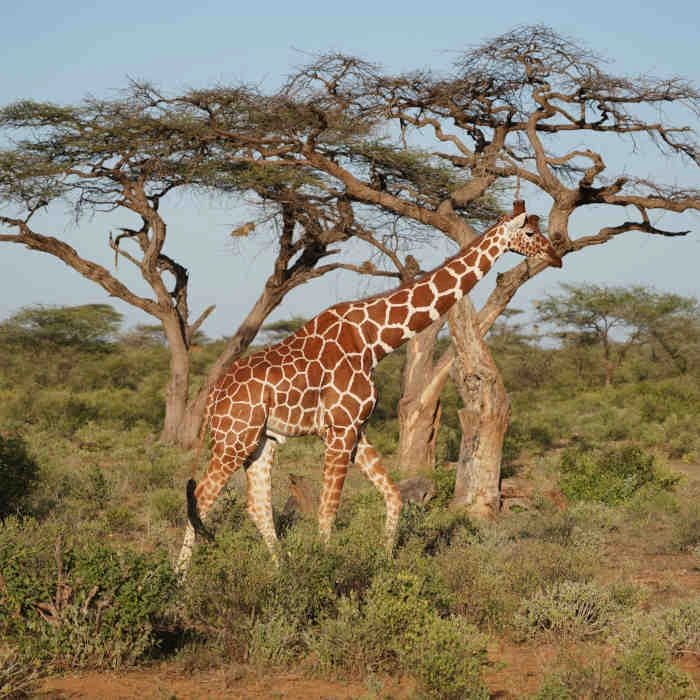
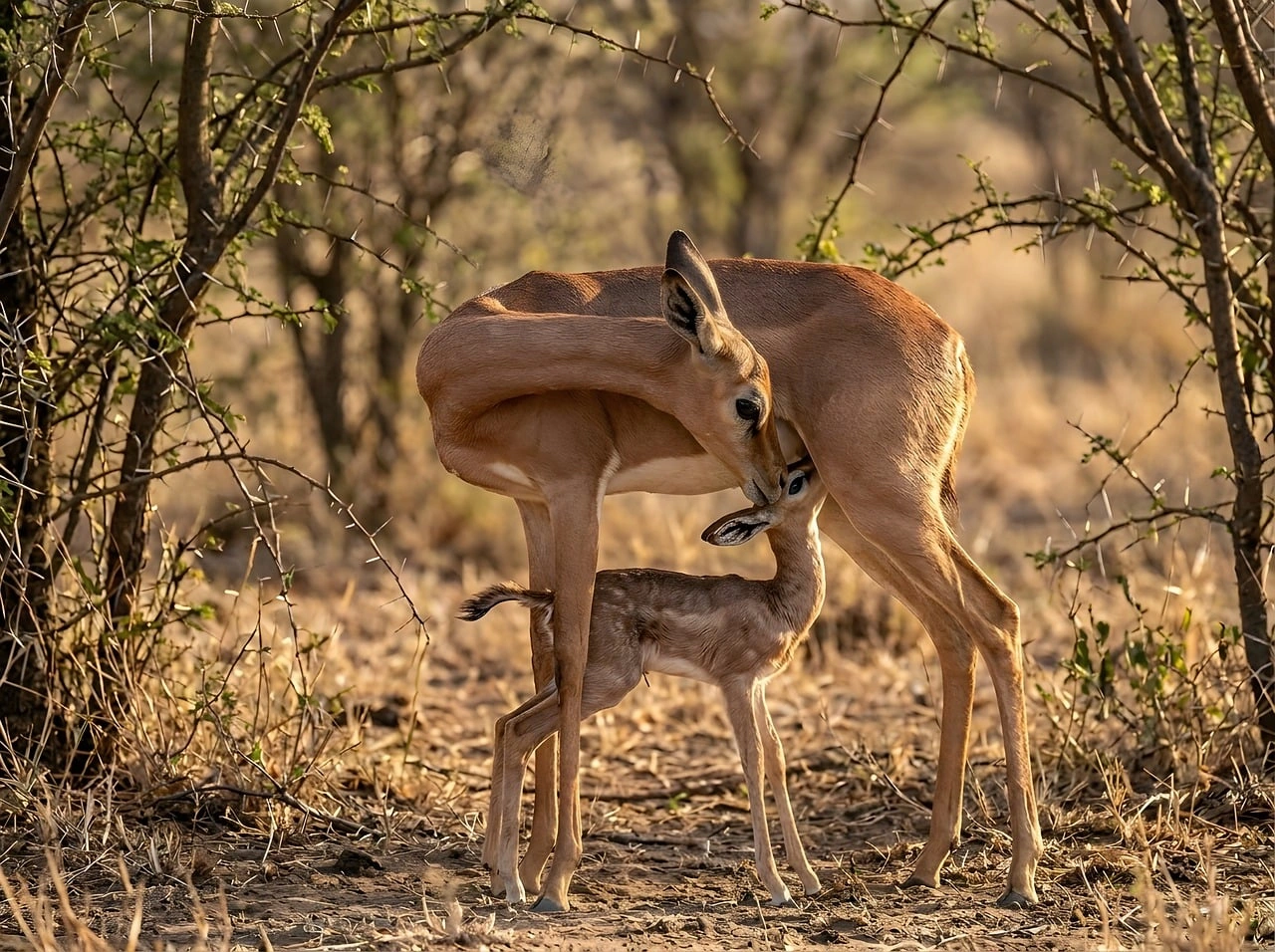
Gerenuk have an exceptionally long neck, small head, large eyes and long legs. Males carry lyre-shaped horns, while females are hornless. The rich reddish-brown body contrasts with a paler neck and underparts.
They live singly, in pairs or in small groups and are highly adapted to arid bush. Their ability to stand bipedally allows them to reach leaves high in shrubs and young trees.
Safari context in Kenya: Within the current Greatlink Safaris destination network, useful places to look for this species include Tsavo East National Park, Buffalo Springs National Reserve, and Samburu National Reserve. Sightings remain natural and unpredictable, so Greatlink Safaris plans around habitat, season and realistic wildlife expectations rather than guarantees. Travellers can also explore the Kenya wildlife guide or compare private Kenya safaris that visit suitable ecosystems.
Conservation: Gerenuk are listed as Near Threatened, with habitat degradation, bush clearing and hunting contributing to declines in parts of their range. For the latest global assessment and taxonomic notes, consult the IUCN conservation reference. Kenya protected area information is also available from the Kenya Wildlife Service.
Interesting facts and identification clues
- The name gerenuk is derived from a Somali word meaning giraffe-necked.
- They can feed while balanced on the hind legs and braced against branches.
- Gerenuk obtain much of their water from browse and can live in very dry country.
- Large eyes and ears help detect predators in thorn scrub.
- Northern Kenya is the classic place to look for this species alongside other dry-country specialists.
Responsible viewing: Keep a respectful distance, avoid blocking the animal’s route, keep noise low and follow the driver guide’s instructions. Wildlife behaviour changes with weather, breeding, food, water and human pressure, so every encounter should be treated as an unscripted observation.
Content reviewed 1 Oct 2026