About the Mountain Bongo
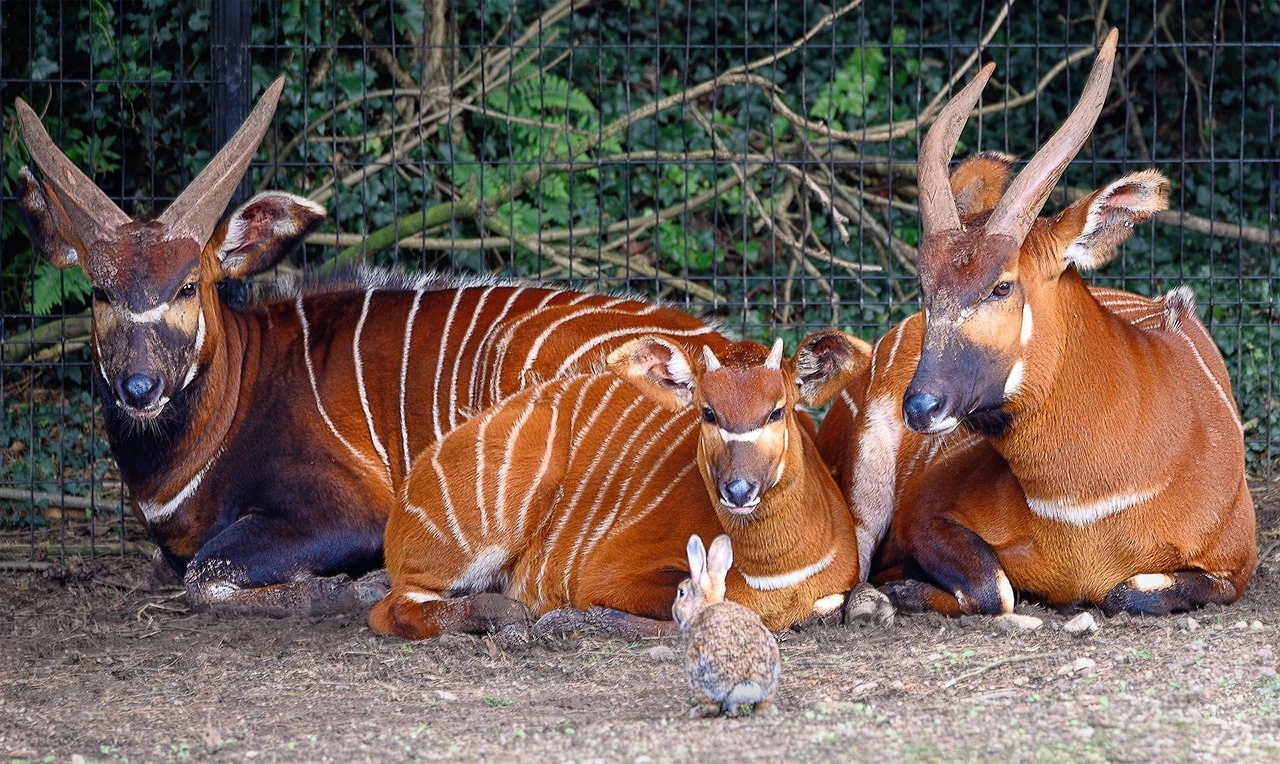
Mountain bongos are large forest antelopes with rich chestnut coats, 10 to 15 narrow white vertical stripes, bold facial markings and long spiral horns carried by both males and females.
They live in dense montane forest and are extremely difficult to see. Females and young may form small groups while adult bulls can be solitary. Much monitoring relies on camera traps, tracks and other indirect evidence.
Safari context in Kenya: Within the current Greatlink Safaris destination network, useful places to look for this species include Aberdare National Park. Sightings remain natural and unpredictable, so Greatlink Safaris plans around habitat, season and realistic wildlife expectations rather than guarantees. Travellers can also explore the Kenya wildlife guide or compare private Kenya safaris that visit suitable ecosystems.
Conservation: Mountain bongo are Critically Endangered and survive only in fragmented Kenyan highland forests. Conservation depends on habitat protection, anti-poaching, genetic management and carefully planned reintroduction and reinforcement programmes. For the latest global assessment and taxonomic notes, consult the IUCN conservation reference. Kenya protected area information is also available from the Kenya Wildlife Service.
Interesting facts and identification clues
- Mountain bongo are endemic to Kenya in the wild.
- Both males and females carry large spiral horns.
- The white stripes break up the body outline in shafts of forest light.
- A direct sighting is exceptionally rare and should never be guaranteed.
- The Aberdare ecosystem is a major focus for conservation, monitoring and recovery work.
Responsible viewing: Keep a respectful distance, avoid blocking the animal’s route, keep noise low and follow the driver guide’s instructions. Wildlife behaviour changes with weather, breeding, food, water and human pressure, so every encounter should be treated as an unscripted observation.
Content reviewed 1 Oct 2026