About the Eland
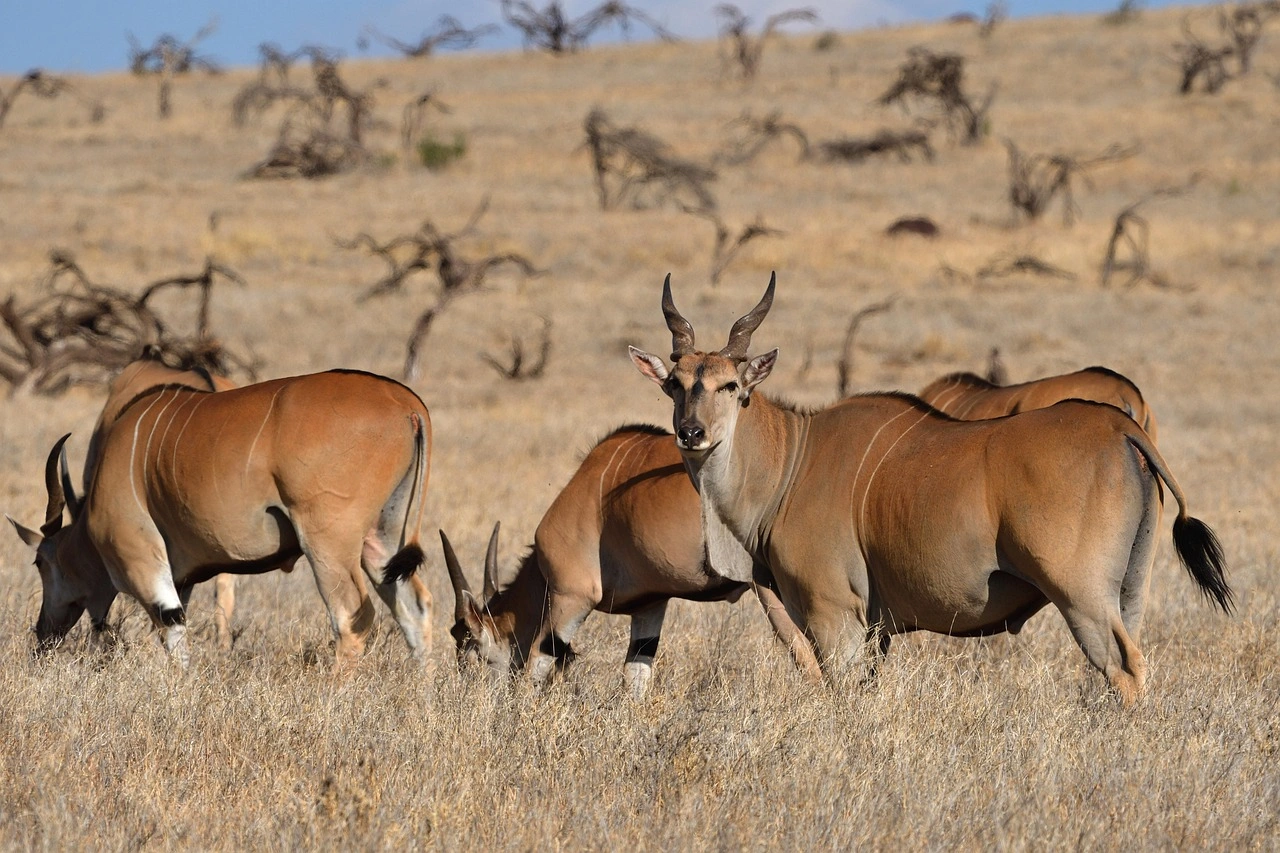
Eland are massive tan antelopes with a hanging dewlap, faint body stripes in some individuals and tightly spiralled horns in both sexes. Adult bulls become darker and heavier with age.
Herd size varies greatly with season and food. Females and young may gather in larger groups, while mature bulls can be more solitary. Despite their size, eland can jump remarkably high and move quietly through bush.
Safari context in Kenya: Within the current Greatlink Safaris destination network, useful places to look for this species include Hell's Gate National Park, Masai Mara National Reserve, and Nairobi National Park. Sightings remain natural and unpredictable, so Greatlink Safaris plans around habitat, season and realistic wildlife expectations rather than guarantees. Travellers can also explore the Kenya wildlife guide or compare private Kenya safaris that visit suitable ecosystems.
Conservation: Common eland remain Least Concern globally, but they need large connected landscapes and are sensitive to heavy hunting and habitat fragmentation. For the latest global assessment and taxonomic notes, consult the IUCN conservation reference. Kenya protected area information is also available from the Kenya Wildlife Service.
Interesting facts and identification clues
- Both males and females carry spiral horns.
- Adult bulls may develop a dark forehead and very large dewlap.
- Eland can go for long periods without drinking when moisture-rich forage is available.
- Calves sometimes gather in nursery groups guarded by adults.
- Their size can be misleading: eland are capable jumpers and fast runners.
Responsible viewing: Keep a respectful distance, avoid blocking the animal’s route, keep noise low and follow the driver guide’s instructions. Wildlife behaviour changes with weather, breeding, food, water and human pressure, so every encounter should be treated as an unscripted observation.
Content reviewed 1 Oct 2026