About the Cheetah
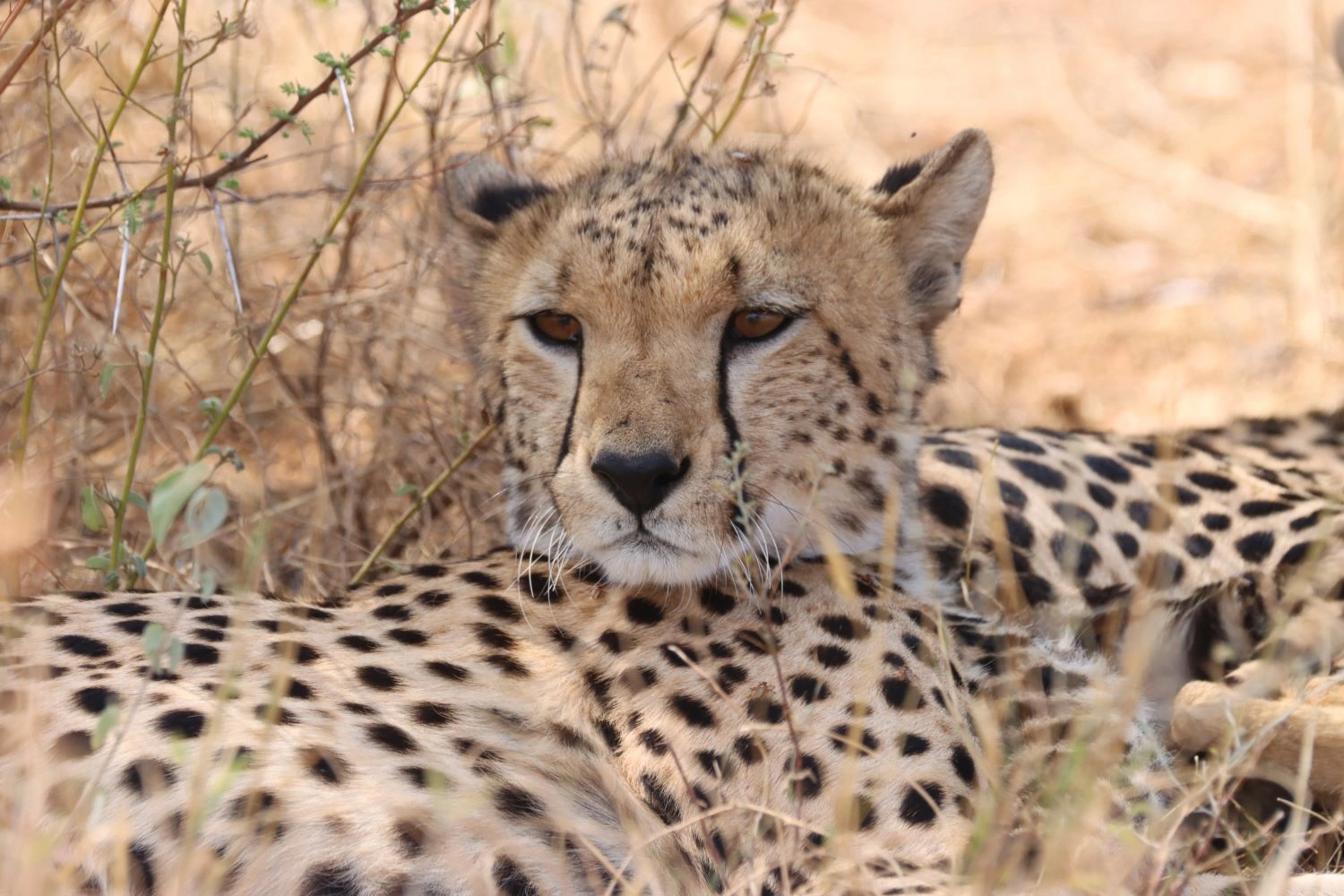
Cheetahs are slender cats with long legs, a small rounded head, deep chest and black tear marks running from the eyes toward the mouth. Their solid black spots differ from the rosettes of a leopard.
Females are usually solitary except when raising cubs. Males may live alone or form stable coalitions, especially brothers. Cheetahs hunt largely by sight and depend on a short explosive chase rather than prolonged pursuit.
Safari context in Kenya: Within the current Greatlink Safaris destination network, useful places to look for this species include Masai Mara National Reserve, Amboseli National Park, and Nairobi National Park. Sightings remain natural and unpredictable, so Greatlink Safaris plans around habitat, season and realistic wildlife expectations rather than guarantees. Travellers can also explore the Kenya wildlife guide or compare private Kenya safaris that visit suitable ecosystems.
Conservation: Cheetahs are Vulnerable globally. Habitat fragmentation, loss of wild prey, conflict with livestock owners and competition with larger carnivores reduce secure habitat outside protected areas. For the latest global assessment and taxonomic notes, consult the IUCN conservation reference. Kenya protected area information is also available from the Kenya Wildlife Service.
Interesting facts and identification clues
- Black tear marks may help reduce glare and are a useful identification feature.
- Unlike most big cats, cheetahs cannot roar; they chirp, purr and vocalise in several other ways.
- Male coalitions can hold territories that overlap the larger ranges used by females.
- After a high-speed chase a cheetah needs time to cool down before feeding.
- Give hunting cheetahs space: crowding by vehicles can interfere with stalking and recovery.
Responsible viewing: Keep a respectful distance, avoid blocking the animal’s route, keep noise low and follow the driver guide’s instructions. Wildlife behaviour changes with weather, breeding, food, water and human pressure, so every encounter should be treated as an unscripted observation.
Content reviewed 1 Oct 2026