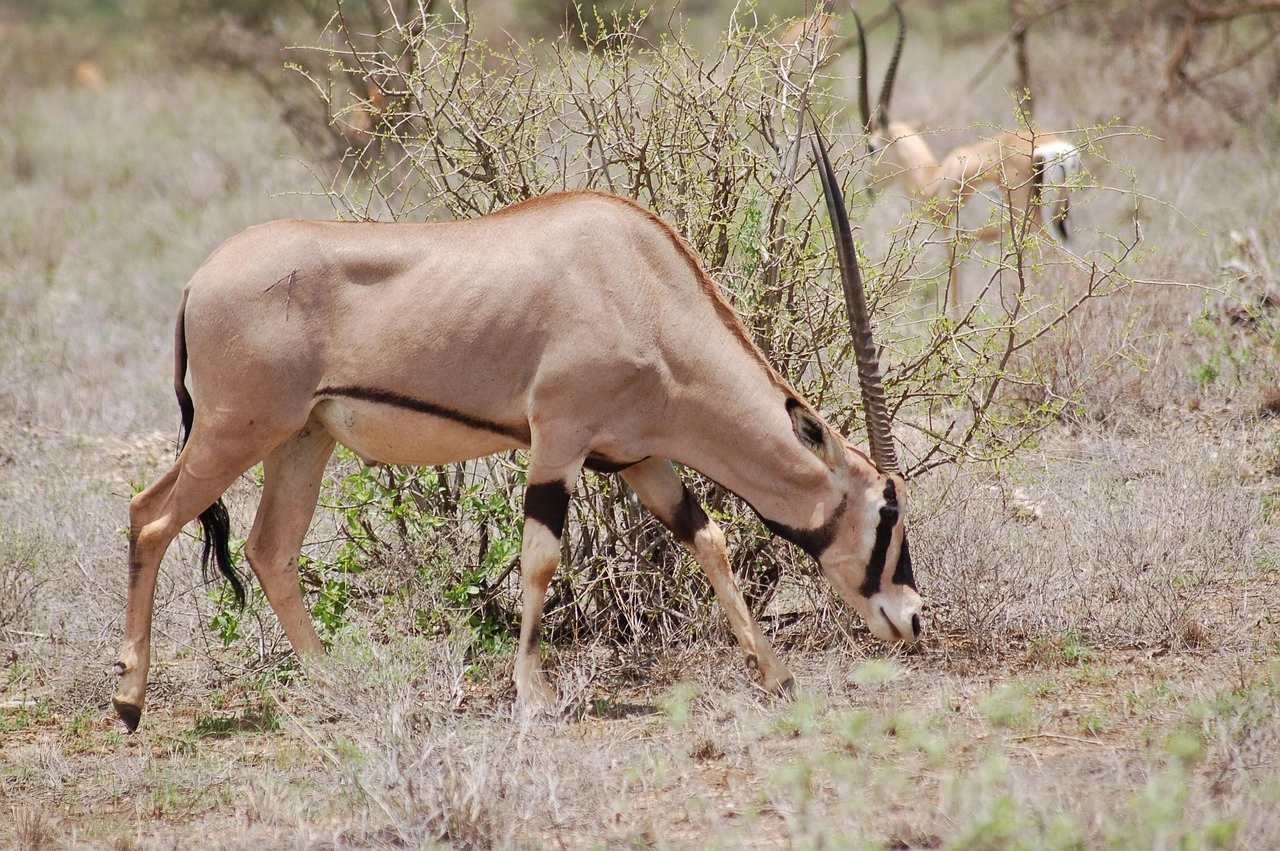
About the Beisa Oryx
Beisa oryx are pale grey with a black side stripe, dark leg markings and a striking black-and-white face. Both sexes carry long, almost parallel horns.
They occur in small herds and can move widely between grazing areas. Physiological adaptations reduce water loss, allowing them to survive where permanent surface water is scarce.
Safari context in Kenya: Within the current Greatlink Safaris destination network, useful places to look for this species include Buffalo Springs National Reserve, Ol Pejeta Conservancy, and Samburu National Reserve. Sightings remain natural and unpredictable, so Greatlink Safaris plans around habitat, season and realistic wildlife expectations rather than guarantees. Travellers can also explore the Kenya wildlife guide or compare private Kenya safaris that visit suitable ecosystems.
Conservation: Beisa oryx are Endangered, with habitat degradation, competition with livestock, hunting and fragmentation affecting populations across the Horn of Africa. For the latest global assessment and taxonomic notes, consult the IUCN conservation reference. Kenya protected area information is also available from the Kenya Wildlife Service.
Interesting facts and identification clues
- Both males and females carry long spear-like horns.
- They can tolerate substantial increases in body temperature before needing to cool down.
- Most moisture can come from food when free water is unavailable.
- Beisa oryx are one of the classic northern Kenya Special Five.
- Samburu and Buffalo Springs are among the best places in the current Greatlink circuit to search for them.
Responsible viewing: Keep a respectful distance, avoid blocking the animal’s route, keep noise low and follow the driver guide’s instructions. Wildlife behaviour changes with weather, breeding, food, water and human pressure, so every encounter should be treated as an unscripted observation.
Content reviewed 1 Oct 2026