About the African Wild Dog
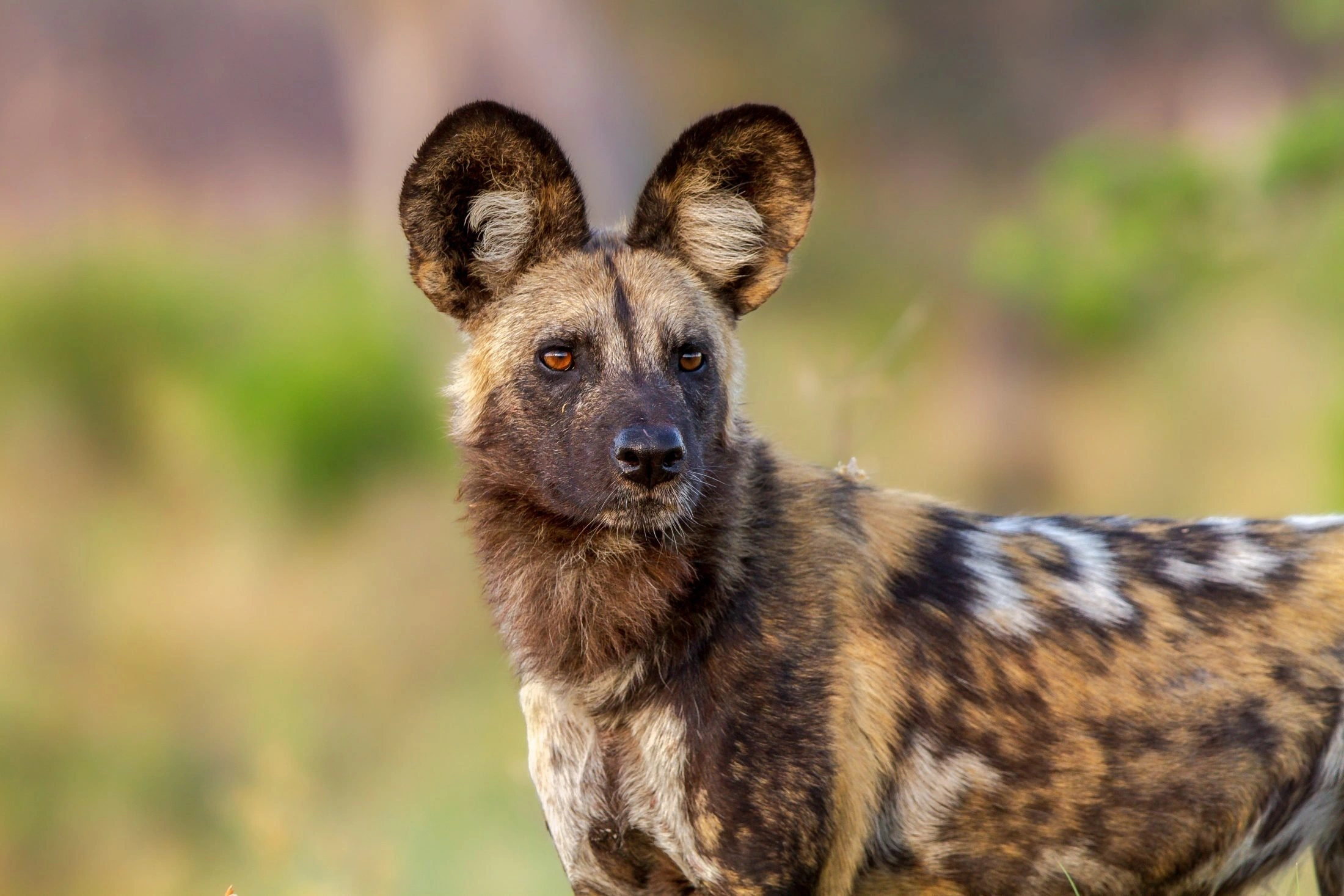
Every African wild dog has an individual black, tan and white coat pattern. Large rounded ears, long legs and a white-tipped tail are common features, though markings vary greatly.
Packs are led by a breeding pair but cooperate extensively in hunting, pup care and feeding injured members. They travel over very large ranges, so sightings can be unpredictable even in suitable habitat.
Safari context in Kenya: Within the current Greatlink Safaris destination network, useful places to look for this species include Ol Pejeta Conservancy, Masai Mara National Reserve, and Meru National Park. Sightings remain natural and unpredictable, so Greatlink Safaris plans around habitat, season and realistic wildlife expectations rather than guarantees. Travellers can also explore the Kenya wildlife guide or compare private Kenya safaris that visit suitable ecosystems.
Conservation: African wild dogs are Endangered. Habitat fragmentation, road mortality, infectious disease, accidental snaring and conflict with livestock owners are major threats. For the latest global assessment and taxonomic notes, consult the IUCN conservation reference. Kenya protected area information is also available from the Kenya Wildlife Service.
Interesting facts and identification clues
- No two wild dogs have the same coat pattern.
- Pack members regurgitate food for pups and sometimes for adults unable to hunt.
- They hunt through stamina and coordinated pursuit rather than ambush.
- Large home ranges mean a pack may disappear from a safari area for weeks.
- A wild dog sighting should be treated as a special opportunity, never a guaranteed inclusion.
Responsible viewing: Keep a respectful distance, avoid blocking the animal’s route, keep noise low and follow the driver guide’s instructions. Wildlife behaviour changes with weather, breeding, food, water and human pressure, so every encounter should be treated as an unscripted observation.
Content reviewed 1 Oct 2026